
Find Your Best Insole
Guide to Choosing the Right Carbon Fiber Insole
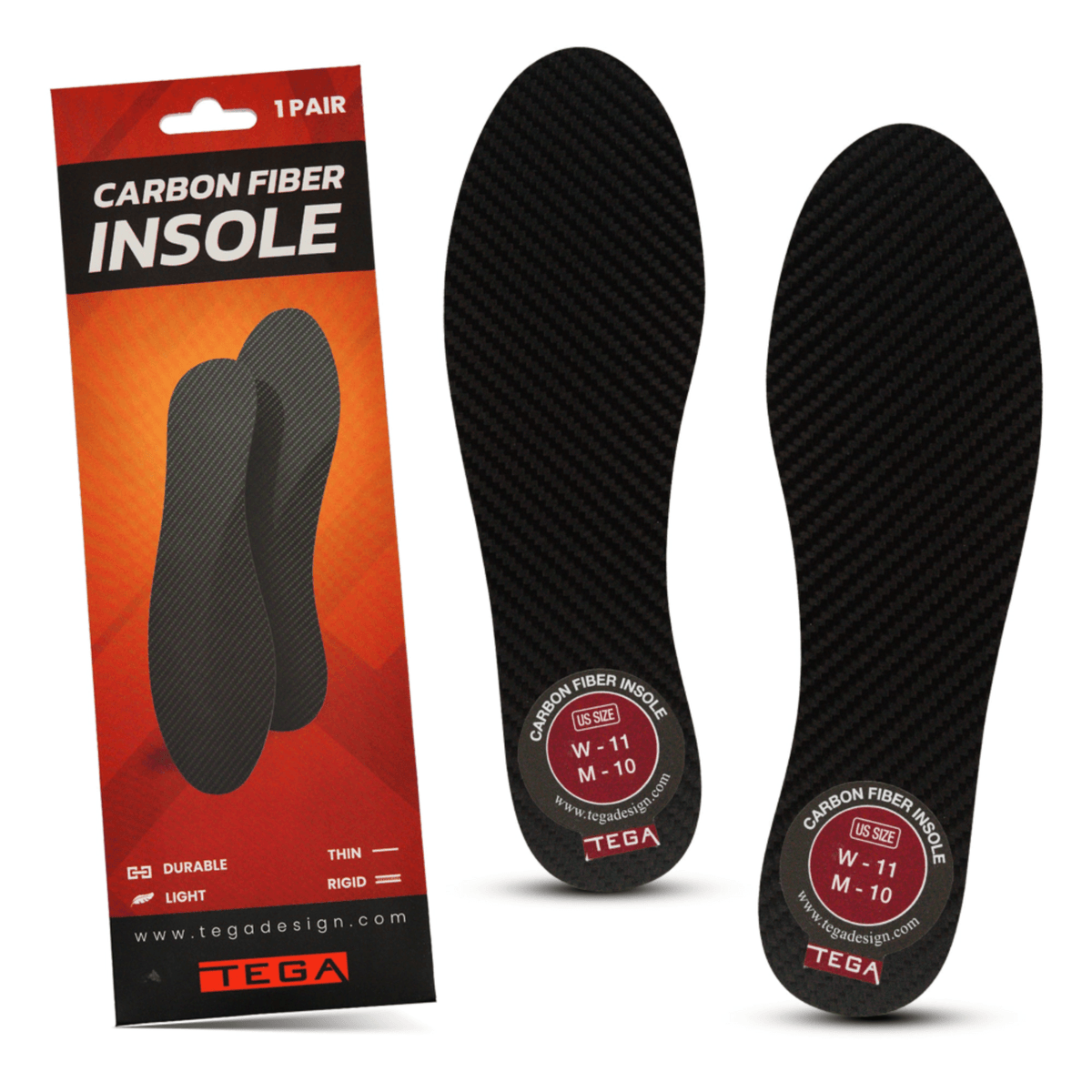
FULL-WIDTH CARBON FIBER INSOLE
If your goal is to limit forefoot flexion across the second through fifth metatarsophalangeal joints, a full-width carbon fiber insole may be an option to consider.
This design is commonly chosen by customers seeking added forefoot rigidity in connection with conditions such as Turf Toe or Freiberg’s disease.
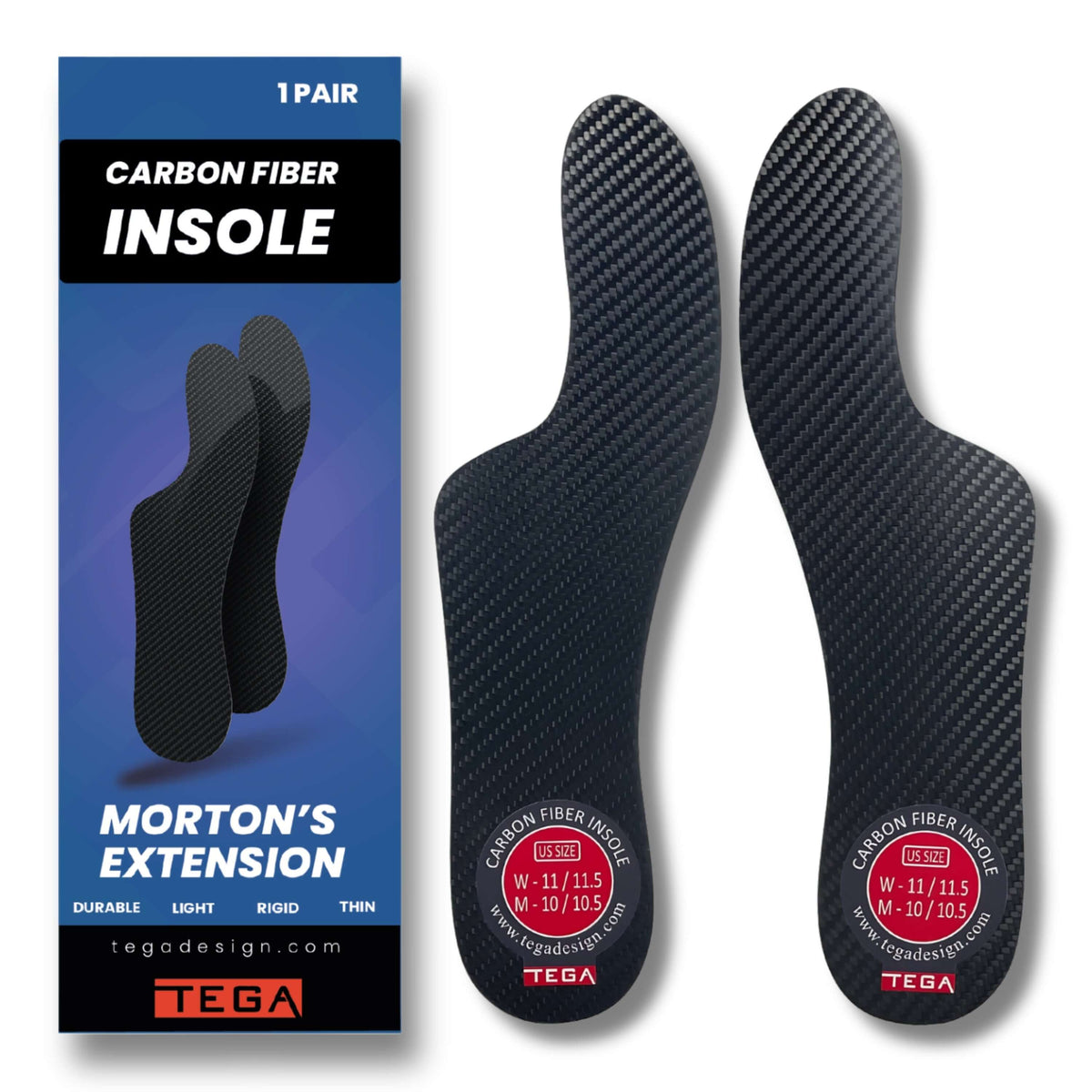
MORTON'S EXTENSION ORTHOTIC
If the primary symptoms occur at the first metatarsophalangeal joint (the joint of the big toe), either insole design could work. However, the Morton’s extension design provides better movement for the lateral or smaller toe joints compared to the full-width design.
The Morton’s Extension provides targeted rigidity beneath the big-toe area while allowing comparatively more movement at the smaller toe joints. It is commonly chosen by customers seeking this type of support in connection with Hallux Rigidus, Hallux Limitus, or big-toe arthritis.
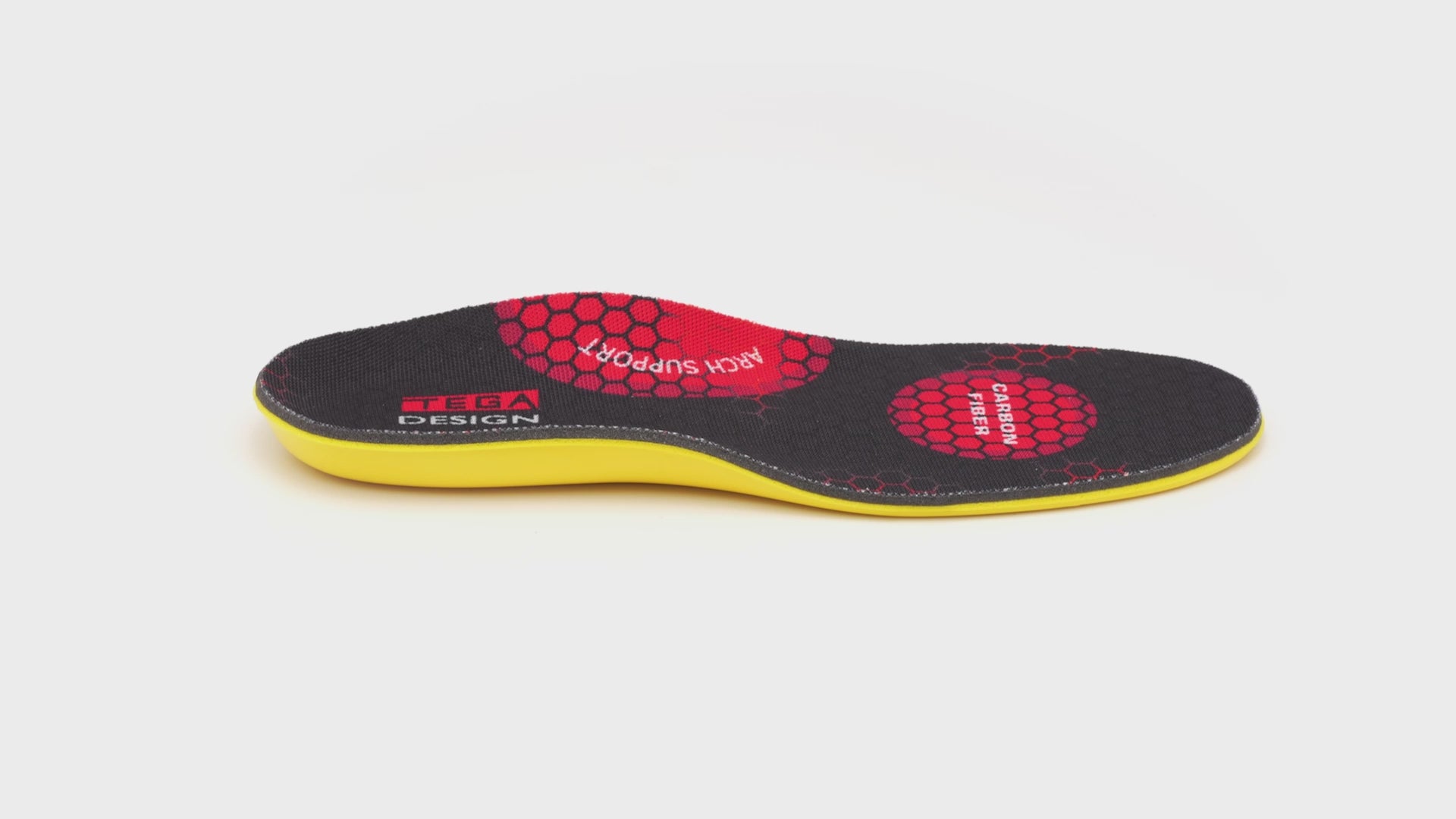
ARCH SUPPORT INSOLE
Upgrade your footwear with the Carbon Fiber Insole with Arch Support, designed to provide structured arch support, heel cushioning, and added stability for everyday wear and athletic activities.
A carbon fiber plate at the bottom adds controlled rigidity, while the ergonomic arch profile and deep heel cup help create a more supported and stable feel inside the shoe. It is commonly chosen by customers seeking additional footwear support in connection with flat feet, high arches, overpronation, plantar fasciitis, or heel discomfort.
Differences Between Full-Width Carbon Fiber Insoles
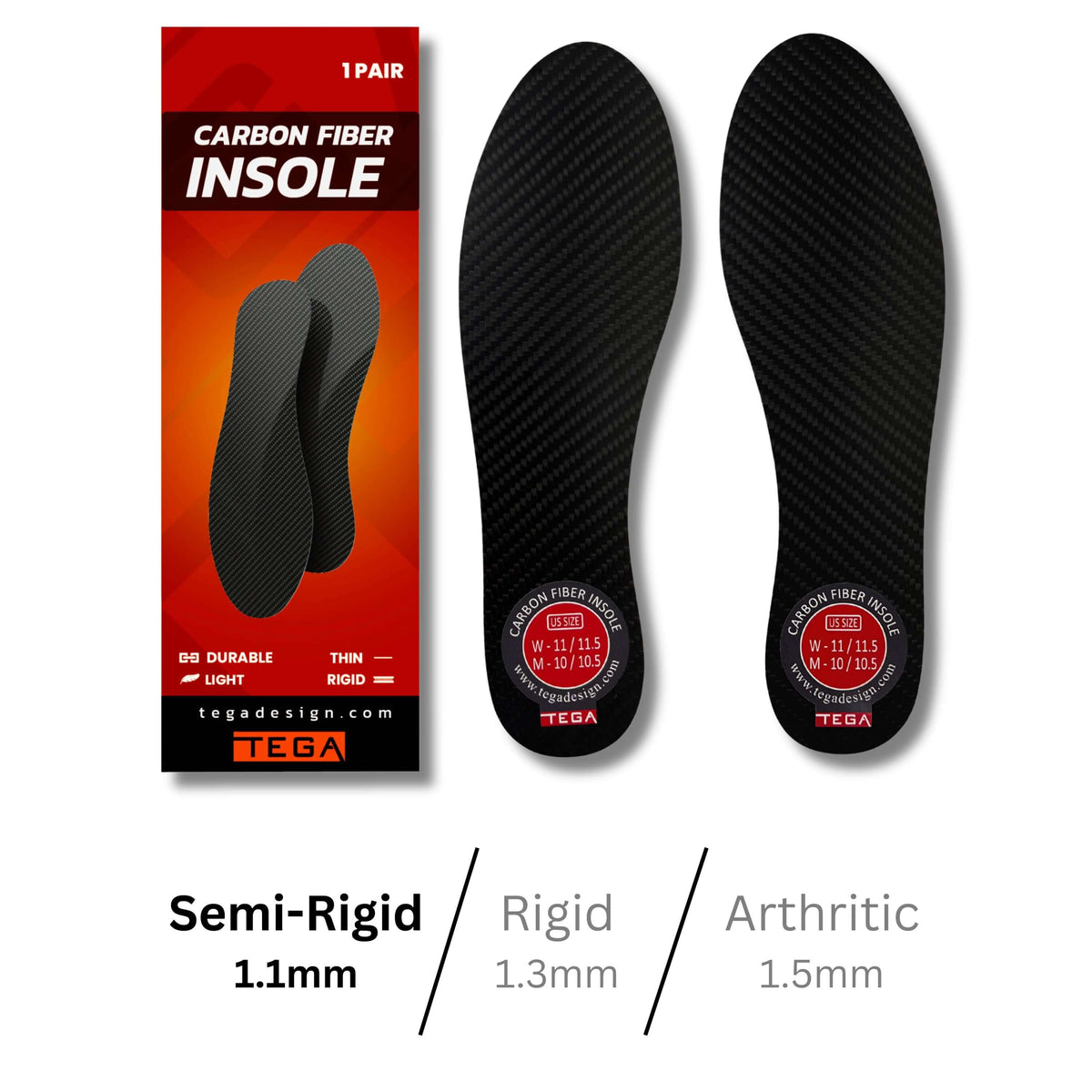
Semi-Rigid Carbon Fiber Insole
Offers a balance of flexibility and strength.
Provides mild support and mild pronation control.
Ideal for everyday use, walking , and light sports.
Easily fits into shoes without taking up too much space.
Provides a less fatiguing experience.
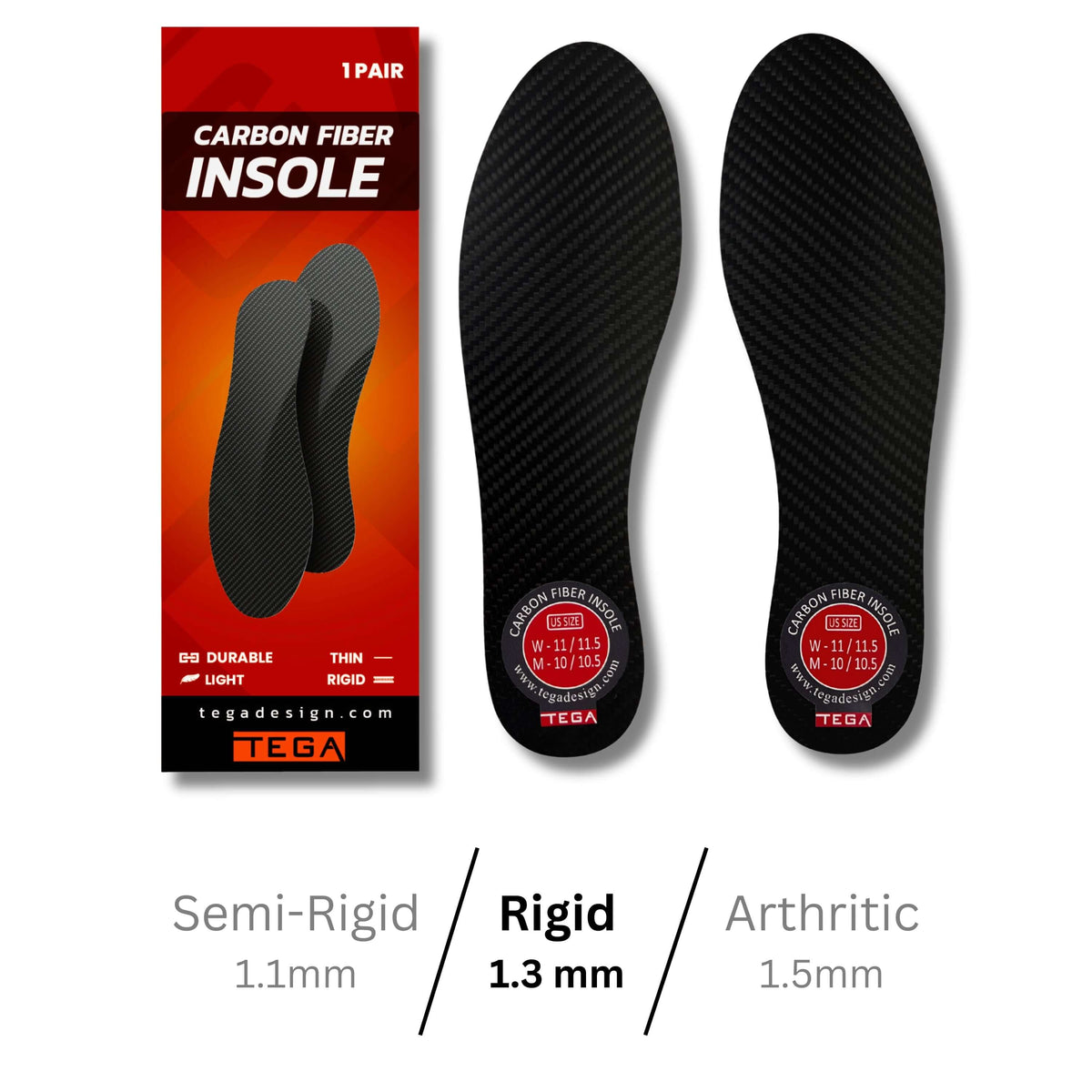
Rigid Carbon Fiber Insole
Provides maximum strength and support.
Ideal for moderate to severe pronation control.
Suitable for high-impact sports like running, cycling, and basketball.
Commonly Used For: Turf Toe, Hallux Rigidus, Hallux Limitus, or certain metatarsal injuries.
Enhances energy transfer and ankle stability.
Ideal for those seeking more power and performance.
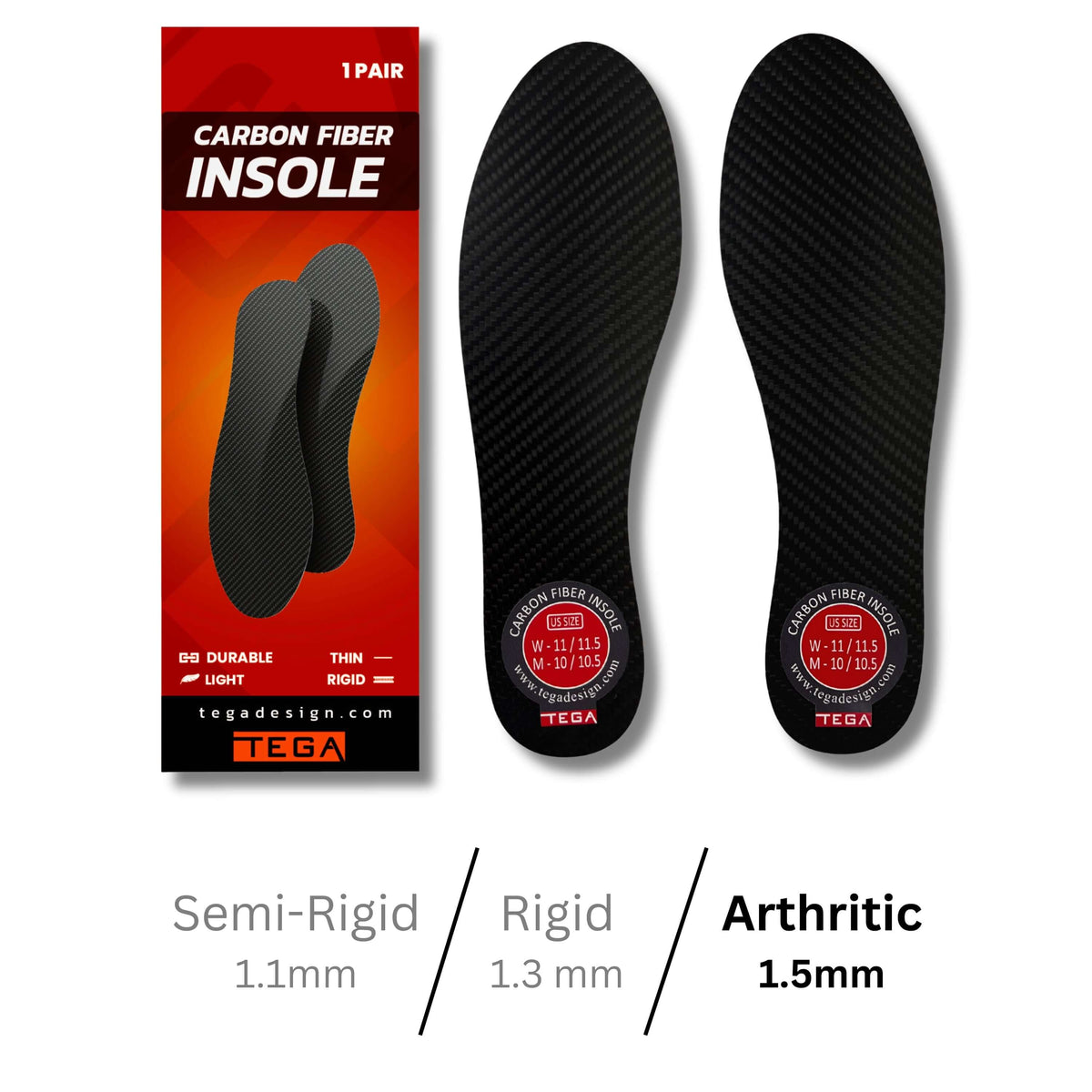
Very-Rigid Carbon Fiber Insole
Offers the highest level of strength and stability.
Designed for customers seeking our highest level of rigidity and the least amount of forefoot flex.
Ideal for jobs that require prolonged standing or carrying heavy loads.
Provides maximum support and protection.
Flexibility Comparison

Disclaimer
This guide is intended to help compare the mechanical features of our insoles, such as rigidity, coverage area, and degree of motion restriction. It is not a medical diagnosis or treatment recommendation. If you have an injury, medical condition, recent surgery, or persistent pain, please consult a qualified healthcare professional before choosing an insole.