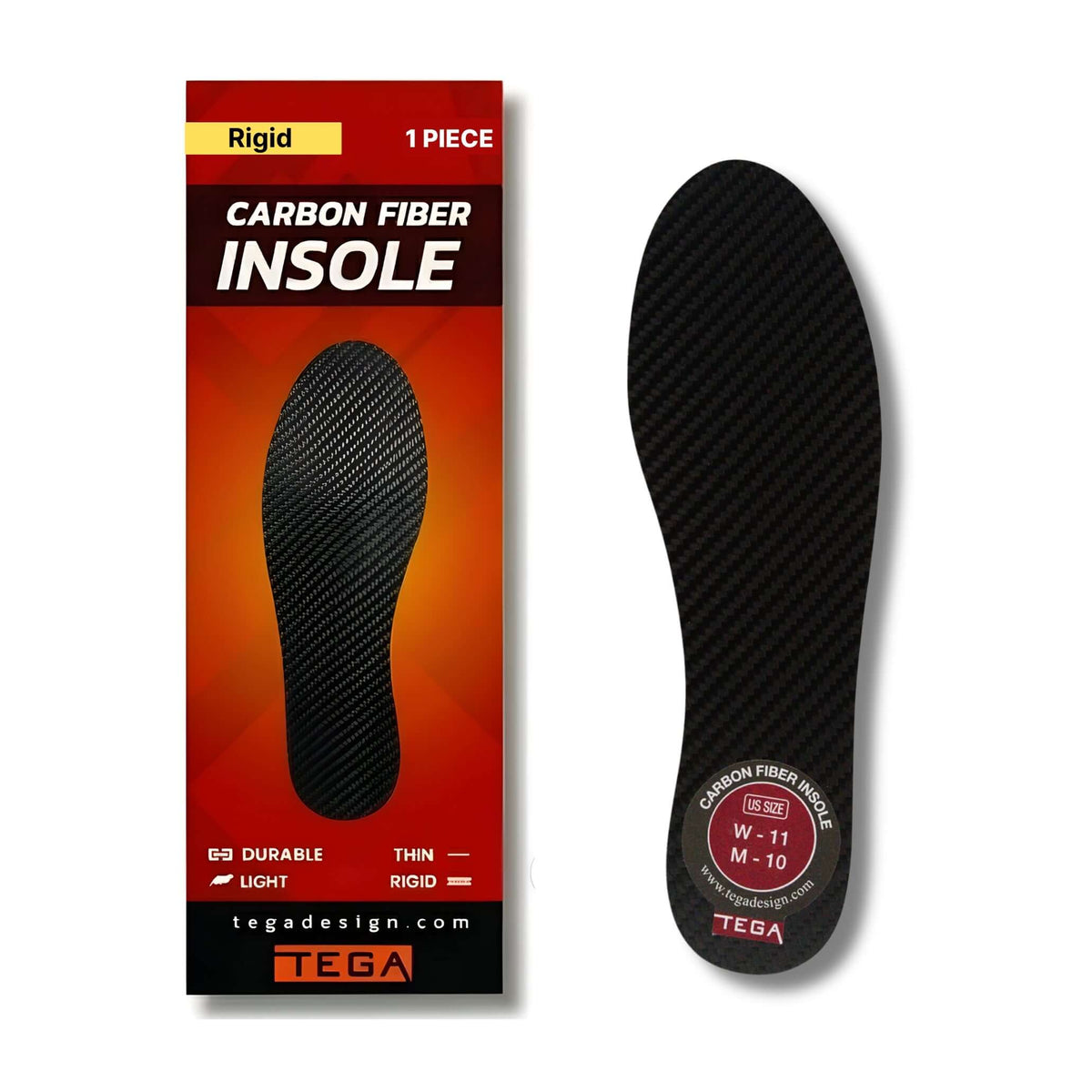
Rigid Carbon Fiber Insole (1.3mm)
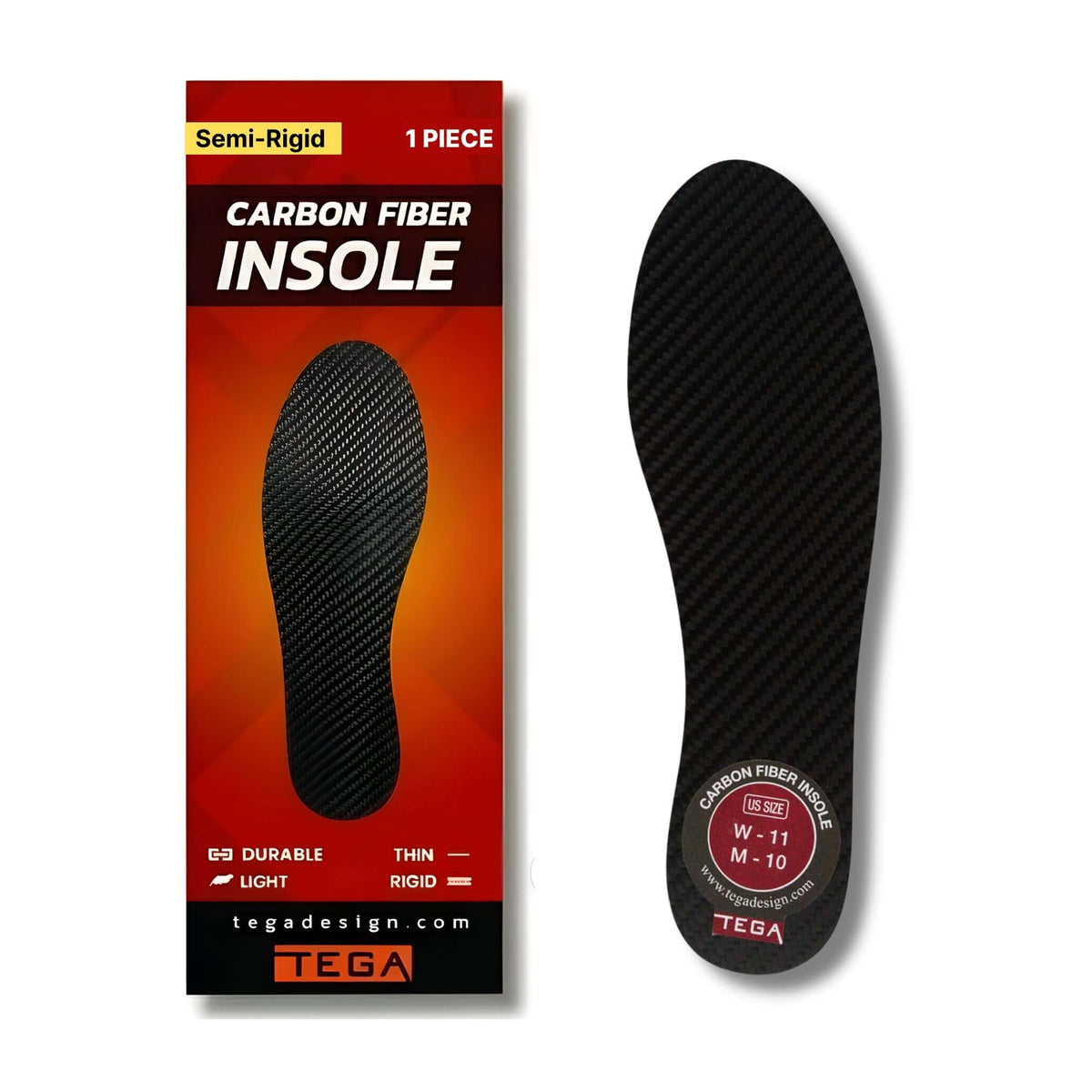
Semi-Rigid Carbon Fiber Insole (1.1 mm)
Carbon Fiber Basketball Insoles for Faster, Safer Play
Constant jumping, cutting, and pivoting place significant demands on a basketball player's feet, while repeated movement can make proper support especially important. Tega Design's carbon fiber basketball insoles provide a rigid, structured foundation designed to complement performance footwear. The firm construction can help limit excessive foot movement while maintaining a stable feel during quick movements. Players can choose a support level that suits their footwear, activity level, and individual comfort preferences.
The Demands Basketball Places on Your Feet
Basketball involves frequent jumping, landing, sprinting, cutting, and pivoting, all of which place repeated demands on the feet and lower limbs. These movements can contribute to discomfort around the toes, forefoot, arch, and heel, particularly when training volume increases. Appropriate footwear and structured support may help provide a more stable foundation during these activities.
What Makes These Basketball Insoles Different
Carbon fiber basketball insoles for athletes can provide a combination of structural rigidity and a streamlined profile for compatible performance sneakers. Carbon fiber maintains its shape under repeated loading, giving the foot a firm platform rather than relying solely on compressible cushioning. The design can be useful for players who prefer a more structured feel beneath the forefoot.
Stability on Cuts and Jumps
The rigid carbon panel provides a firm platform that can help limit excessive movement during lateral actions and push-off. This added structure may create a more controlled underfoot feel during defensive slides, pivots, and quick changes in direction. The insole is intended to complement the shoe's existing support rather than replace proper basketball footwear. Players should ensure the insert fits securely and leaves enough room for comfortable movement.
Reliable Impact Protection
Landing from a jump places substantial force through the feet, particularly around the heel and forefoot. A carbon fiber insole primarily provides structural rigidity rather than functioning as a traditional shock-absorbing material. Depending on the specific design, cushioning components may work alongside the rigid base to improve overall underfoot comfort. This combination can give players a balance between a firm foundation and a more comfortable feel during repeated activity.
Finding the Best Basketball Insoles for Your Position
Guards, forwards, and centers all perform different movements on the court, but position alone does not determine the appropriate insole. The best basketball insoles should be selected based on the player's footwear, preferred rigidity, activity level, and individual support needs. Players managing a known foot condition may also require a specific design recommended by a qualified healthcare professional. A properly fitted insole should sit securely inside the shoe without creating unwanted pressure or changing the shoe's fit significantly. Checking the product specifications and footwear compatibility can help players make a more suitable choice.
Step Up Your Game Today
A supportive basketball insole can provide additional structure for players who spend significant time jumping, cutting, pivoting, and running on the court. Consistent foot comfort can also make it easier to focus on training and everyday movement without relying solely on soft cushioning. Players managing specific forefoot concerns can also consider Tega Design’s Morton's Extension Orthotic insoles for targeted structural support. Explore the collection today and choose an insole that fits your basketball shoes, activity level, and support preferences.
What Is the Best Insole for Arthritis?
Frequently Asked Questions
Can an insole really help with foot arthritis?
Yes — specifically by reducing the mechanical stress on the arthritic joint during walking. An insole won't reverse cartilage damage, but it removes the repeated motion that keeps the joint inflamed and painful. Many people with hallux rigidus find that a rigid insole is what allows them to stay active without surgery.
Is the Very Rigid (1.5mm) always the right choice for arthritis?
For advanced hallux rigidus or cases where pain is significant with every step, yes. For earlier-stage arthritis (hallux limitus with mild to moderate symptoms), the Rigid 1.3mm may be sufficient. If you're unsure, use the Insole Finder to get a guided recommendation.
Will a rigid insole feel uncomfortable?
It feels different from a cushioned insole — there's no softness underfoot. Most people adapt within a week. The rigidity that takes getting used to is exactly what's protecting the joint.
Can I use this insole after foot surgery?
The Very Rigid 1.5mm is listed as appropriate for post-op recovery on the product page. That said, always follow your surgeon's specific post-operative protocol before adding any insoles during recovery.