
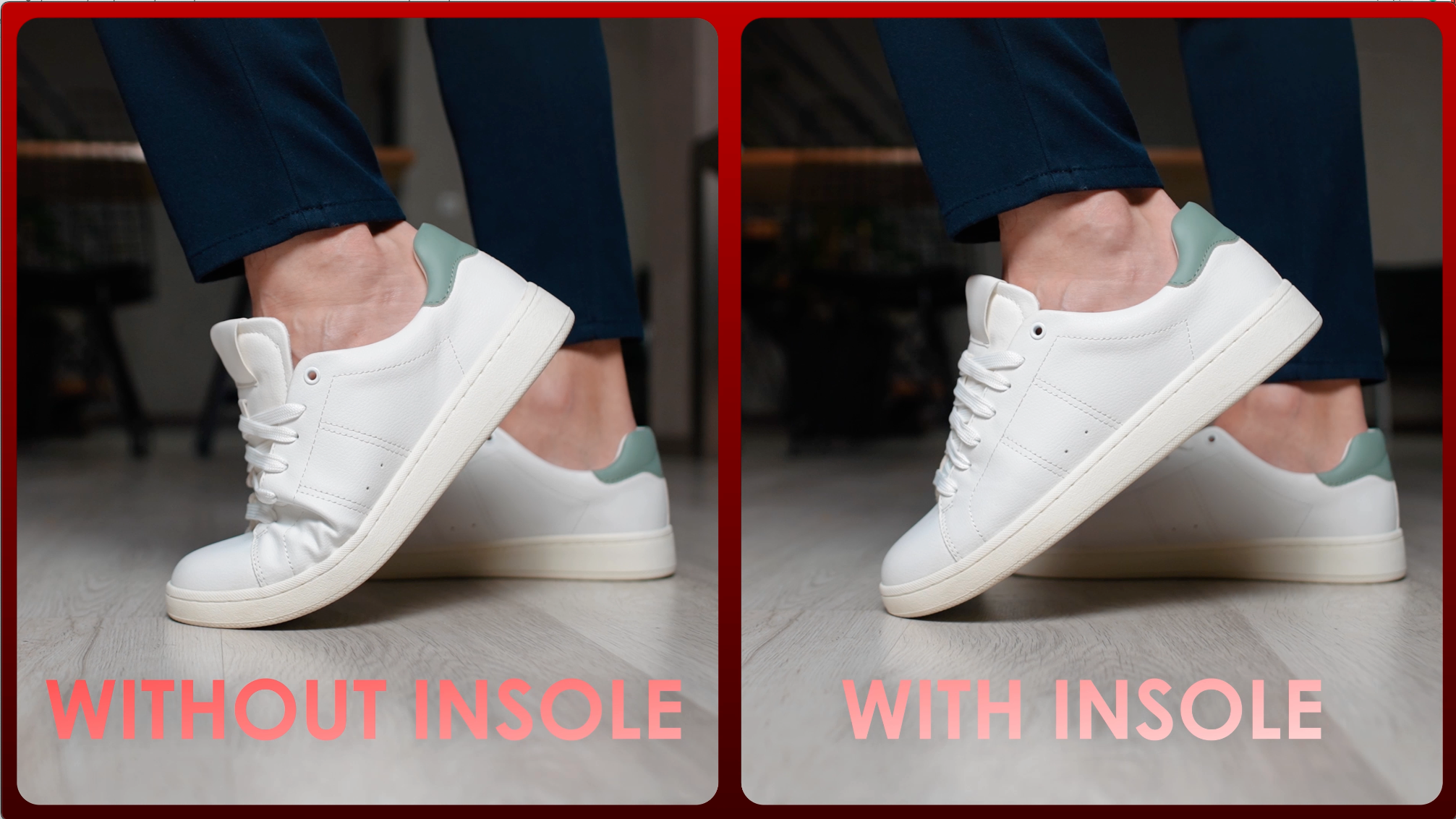
Foot arthritis doesn't just hurt — it changes the way you move. The stiffness, the grinding sensation, the sharp pain when you push off to walk. Over time, it starts to limit what you're willing to do, how far you'll walk, whether you'll stand in line or take the stairs.
Most people with foot arthritis try cushioned insoles first. Some get temporary relief. But cushioning alone doesn't address the real problem: it's not that the floor is too hard. It's that your joints are being forced to move in ways they can no longer handle without pain. That's a mechanical problem, and it requires a mechanical solution.
Here's what you need to know about picking the right insole for arthritis — and why rigidity matters far more than softness.
How Arthritis Affects the Foot
Arthritis in the foot most commonly affects the big toe joint — the first metatarsophalangeal (MTP) joint. When cartilage in this joint wears down, bone rubs against bone with every step. The joint becomes inflamed, stiff, and painful, particularly during the push-off phase of walking when the toe needs to bend upward.
This condition — arthritis of the big toe joint — is called hallux rigidus in its advanced form, and hallux limitus in earlier stages. It's one of the most common forms of foot arthritis, and one of the most debilitating, because the big toe is involved in virtually every step you take.
Arthritis can also affect the midfoot joints and the ankle, but for most people who are looking for insole help, it's the big toe joint that's the primary source of pain.
Why Most Insoles Don't Help with Arthritis
Standard foam or gel insoles add cushioning. They compress under load to soften impact. That can take the edge off general foot fatigue — but for arthritis, they miss the point entirely.
The pain in arthritic joints comes from movement, not from hard surfaces. Every time the big toe bends during normal walking, the damaged cartilage is compressed and the joint is irritated. A soft insole does nothing to prevent that bend. In fact, a flexible insole can make things worse by allowing the foot to move freely in all the directions that aggravate the joint.
What an arthritic foot needs is a rigid platform — something that limits how far the toe bends with each step, reducing the mechanical load on a joint that can no longer handle it.
What Makes an Insole Effective for Arthritis
Rigidity
The single most important characteristic. A rigid insole limits dorsiflexion — the upward bending of the big toe — during the push-off phase of walking. Less bending means less compression on the damaged cartilage, which translates directly to less pain per step.
This is why carbon fiber is the material of choice for arthritic foot conditions. It's exceptionally stiff relative to its thickness, maintaining its rigidity under sustained load without compressing or degrading over time.
Thin Profile
Arthritic feet are often sensitive to pressure and fit changes. An insole that's too thick alters the heel height and toe box fit, which can create new discomfort. Carbon fiber insoles as thin as 1.5mm provide maximum rigidity without meaningfully changing shoe fit.
Durability
Arthritis is a long-term condition. You need an insole that provides consistent support over years, not months. Foam-based insoles compress and lose their structure — sometimes within weeks of heavy use. A carbon fiber insole maintains the same mechanical properties on year three that it had on day one.
The Best Insole for Arthritis: Tega Design Very Rigid Carbon Fiber Insole (1.5mm)
For foot arthritis — particularly hallux rigidus and advanced hallux limitus — the Tega Design Very Rigid Carbon Fiber Insole (1.5mm) is specifically engineered for this use case.
At 1.5mm, it's the stiffest insole in the Tega Design lineup — designed for conditions where maximum joint immobilization is the priority. Here's what makes it the right choice for arthritis:
Maximum rigidity at 1.5mm thickness. The 1.5mm carbon fiber plate provides greater resistance to bending than the 1.1mm or 1.3mm versions. For an arthritic joint, that extra rigidity is meaningful — it keeps the toe in a more neutral position through the entire gait cycle.
Reversible design. The insole works on either foot, which is practical for people who only need single-foot support or want to trial one side first. If you're going to buy a single insole, it functions on either the left or right foot without modification.
Universal fit for everyday footwear. It fits in athletic shoes, work shoes, dress shoes, and most everyday footwear. The only exception is high heels. At 1.5mm, it slides in without changing the fit of most shoes.
3-year warranty. Arthritis is a long-term condition. An insole that comes with a 3-year warranty — and is built to outlast that — is a fundamentally different proposition than replacing foam insoles every few months.
→ Shop the Very Rigid Carbon Fiber Insole (1.5mm)
How to Use It
Remove the stock insole from your shoe and replace it with the carbon fiber insole. If your shoe has a thick removable insole, taking it out first ensures the carbon fiber sits flat and the fit isn't too snug.
Share:
Carbon Fiber Insole vs. Foam Insole: Which One Actually Works?
What Is Foot Rocker Geometry and How Does It Work?