
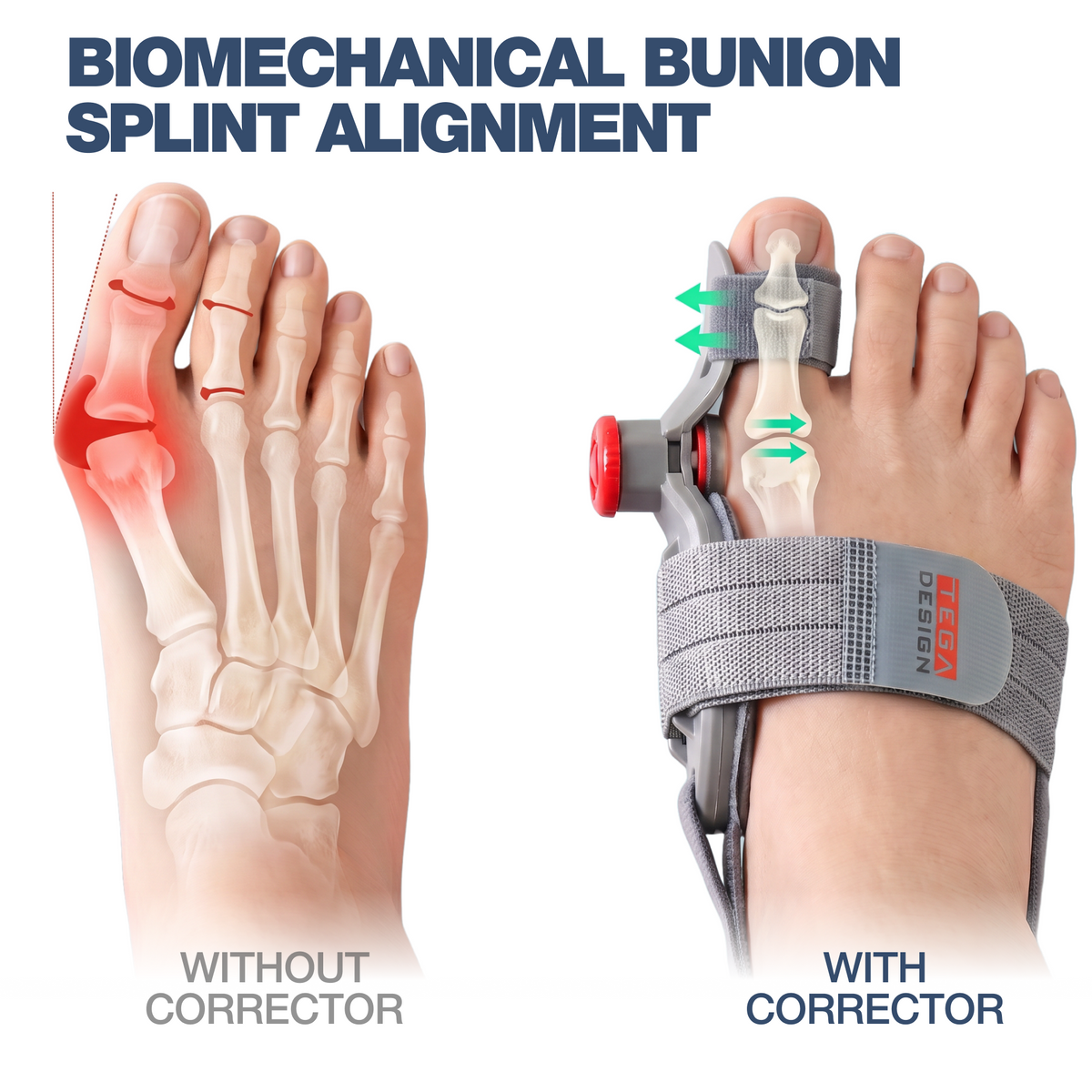
Short answer: yes — with the right expectations. A bunion corrector won’t permanently reverse a structural bone deformity. But it can meaningfully reduce pain, slow progression, and give the joint a better resting position during recovery. For most people who aren’t ready for surgery, that’s exactly what they need.
Here’s what actually separates an effective corrector from a waste of $20.
What a Bunion Corrector Can and Can’t Do
It can:
- Gently guide the big toe toward a more natural position during wear
- Reduce friction and pressure on the bunion site
- Slow the inward drift of the toe over time — particularly in early to moderate stages
- Provide meaningful pain relief during rest and overnight use
It can’t:
- Permanently correct the underlying bone deformity
- Replace surgery for severe or advanced bunions
- Work if worn inconsistently
The goal is management, not cure. Used consistently as part of a broader approach — wider footwear, supportive insoles, targeted stretching — a bunion corrector is a legitimate tool.
What to Look For
Adjustable Tension
A fixed splint applies the same force regardless of how your toe responds. Adjustable tension lets you start gentle and increase gradually — which is the right approach. Too much force too fast creates new pain.
Padded Straps
Straps sit against the foot for extended periods. Without padding, pressure points make the corrector unwearable within an hour — and an unworn corrector helps no one.
Fits Both Feet
Bunions can affect either foot, or both. A design that works on left or right without separate versions is more practical.
Durability
Look for replaceable support components. The parts in direct contact with the foot wear down first — replaceable plates mean you don’t have to replace the whole device.
Tega Design Adjustable Bunion Corrector
The Tega Design Adjustable Bunion Corrector checks all of these boxes. The adjustable tension dial is the standout feature — precise tension control means you can progress at a pace that’s actually comfortable. Padded straps, reversible left/right design, replaceable support plates, and a 3-year warranty round it out.
At $20 per pack, it’s one of the most practical entry points into proper bunion management — and may be eligible for purchase with HSA/FSA funds.
Best for: Early to moderate bunions, daily discomfort from toe misalignment, anyone managing symptoms without surgery.
→ Shop the Adjustable Bunion Corrector — $20
FAQ
How long should I wear it each day?
Start with 30–60 minutes and increase gradually. Most people get the most value wearing it during rest periods or overnight.
Can I wear it inside a shoe?
It’s designed for use outside of footwear. For in-shoe support during the day, pair it with a wide toe box shoe and a rigid insole if the joint itself is painful.
Will it help a severe bunion?
For severe deformity, it helps with pain and inflammation management rather than realignment. At that stage, a podiatrist consultation is the right move.
→ Read Part 1: What Is a Bunion and What Causes It?
→ Find the right insole for big toe joint pain
Share:
What Is a Bunion — And What Actually Causes It?